
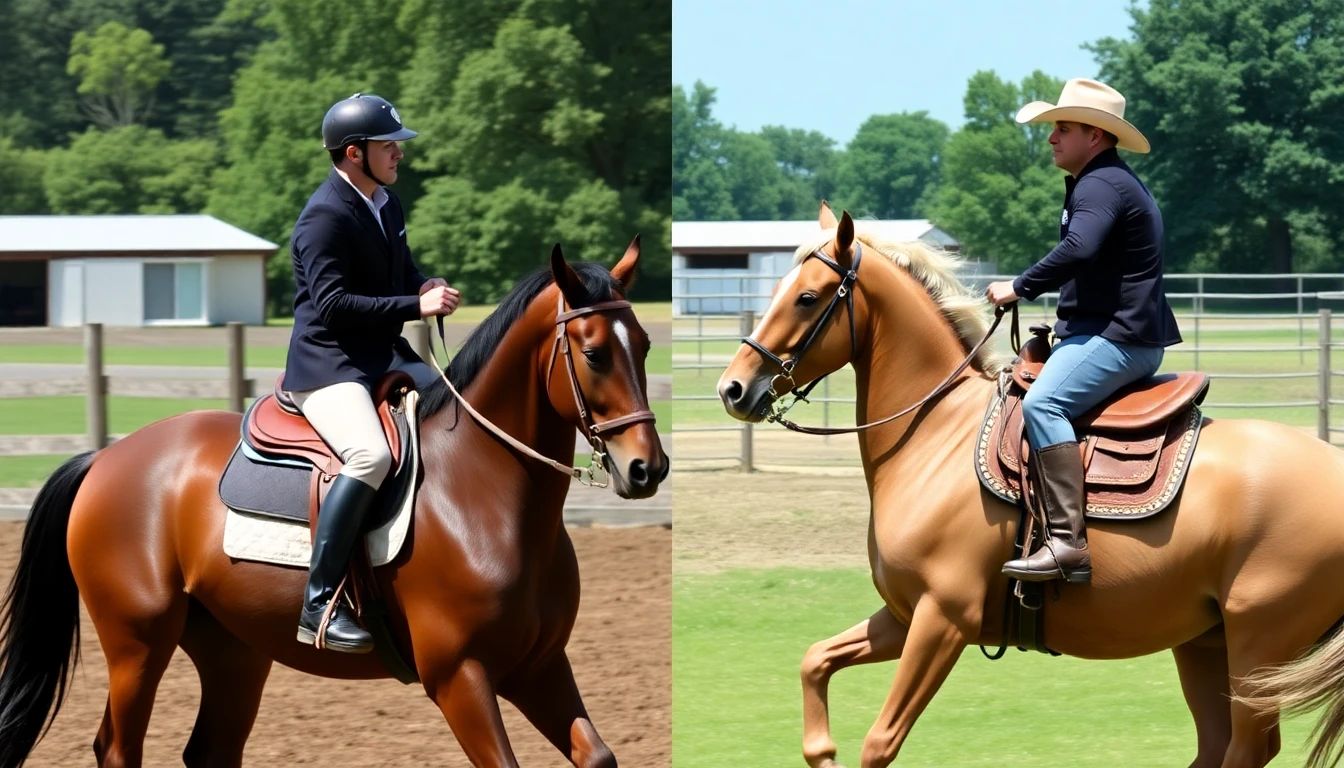
While Western riding and English riding share the same equestrian principles, they differ in riding purpose, techniques, equipment, and even rider attire. In this guide, we’ll detail the key differences between Western and English riding in terms of clothing and equipment, helping you understand which riding style best suits your goals.
1. Gear Differences
Saddle Design and Function
– Western saddles are built for long hours. They’re heavy (25 to 60 pounds), cushioned, and sturdy. The deep seat and high cantle cradle you in place. A horn at the front isn’t just for looks. It’s essential for roping cattle. The broad stirrups help your feet stay secure all day.
– English saddles are graceful and light (10 to 20 pounds). They come without a horn. They have a flat seat with simple panels. Slim, narrow stirrups are standard. The design brings your legs closer to the horse. This gives you precision and feel. Jumping and dressage need this. Everything is stripped down for speed and agility.
Reins, Bits, and Bridles
– Western reins are often split and draped. You handle them one-handed. The communication is subtle and indirect. Think neck reining and long-shanked curb bits or hackamores. Less is more. Slight pressure guides the horse.
– English reins demand both hands. You keep steady, even contact. Precise signals go through laced or rubber reins to a snaffle bit. Advanced riders may use a double bridle. The response is immediate and detailed.
The bridle designs tell their own story. An English bridle might include a flash or figure-eight noseband for extra control. Western bridles skip the noseband. Instead, they show off eye-catching silver buckles and tooling.
Common Accessories
Each style has its toolbox of helpful extras:
– English tack : Martingales keep a horse’s head in check. Breastplates steady the saddle. Special reins give you grip at key moments.
– Western tack : Think tie-downs for head position. Breast collars add stability. Rope attachments help with cattle work. Decorative leatherwork adds a personal touch.
Quick Gear Comparison Table
| Feature | English Riding | Western Riding |
|---|---|---|
| Saddle | 10–20 lbs, no horn, flat seat | 25–60 lbs, horn, deep seat, wide skirt |
| Stirrups | Light, narrow | Wide, built for durability |
| Reins | Both hands, even, direct contact | One hand, split or romal, looser |
| Bits | Snaffle or double bridle | Curb bit, hackamore |
| Tack Attachments | Minimal—often just breastplate, martingale | Multiple: rope, breast collar, saddlebag points |
| Main Purpose | Precision and freedom of movement | Comfort, security, and utility on the job |
2. English vs. Western Equestrian Attire
Choosing the right equestrian apparel is about more than just looking the part. It serves a functional purpose, protecting you from friction and weather while allowing for the freedom of movement unique to each riding style. Whether you’re in a Western saddle or an English one, your attire tells a story of tradition, identity, and practical utility.
English Equestrian Clothing
English riding follows formal tradition that spans decades—sometimes centuries. Picture yourself in a fitted navy show coat, crisp beige breeches , and shiny tall leather boots.
– A certified safety helmet is a must in modern competitions. It protects you and completes the polished look.
– A white stock tie sits at your throat. Black or tan gloves finish the outfit. Every line looks neat and refined.
– Colors stay quiet: blacks, navys, greys, tweed for hunter rings. Scarlet coats appear on honored fox hunters.
For casual riding, switch to a tidy polo and a fitted sweater. Paddock boots work well too. Everything stays clean and built for the saddle.
Typical English Riding Attire
– Fitted show coat (often $100–$300)
– Breeches or jodhpurs
– Tall black riding boots
– Show shirt and stock tie or choker
– Certified helmet
– Gloves
This list looks like a uniform. But riders choose each piece with care and respect for tradition.
Western Riding Attire
Western attire focuses on tough function and bold personality. Each piece handles the rough work of ranch life. Then it transforms for the show ring after a long day.
– Core items include durable denim breeches and long-sleeve cotton shirts. Snaps make changing quick. Those iconic high-heeled cowboy boots complete the basics.
– The cowboy hat blocks harsh prairie sun. Modern safety sometimes calls for a helmet instead.
Typical Western Riding Attire
– Cowboy hat or helmet
– Long-sleeved Western horse riding shirt
– Riding jeans
– Cowboy boots
– Decorative belt for competition
– Embroidered or rhinestone tops
– Chaps or chinks on ranch days
You can’t miss the Western look. It’s practical yet spirited. Rugged with a touch of celebration.
3. Rider Seat and Position
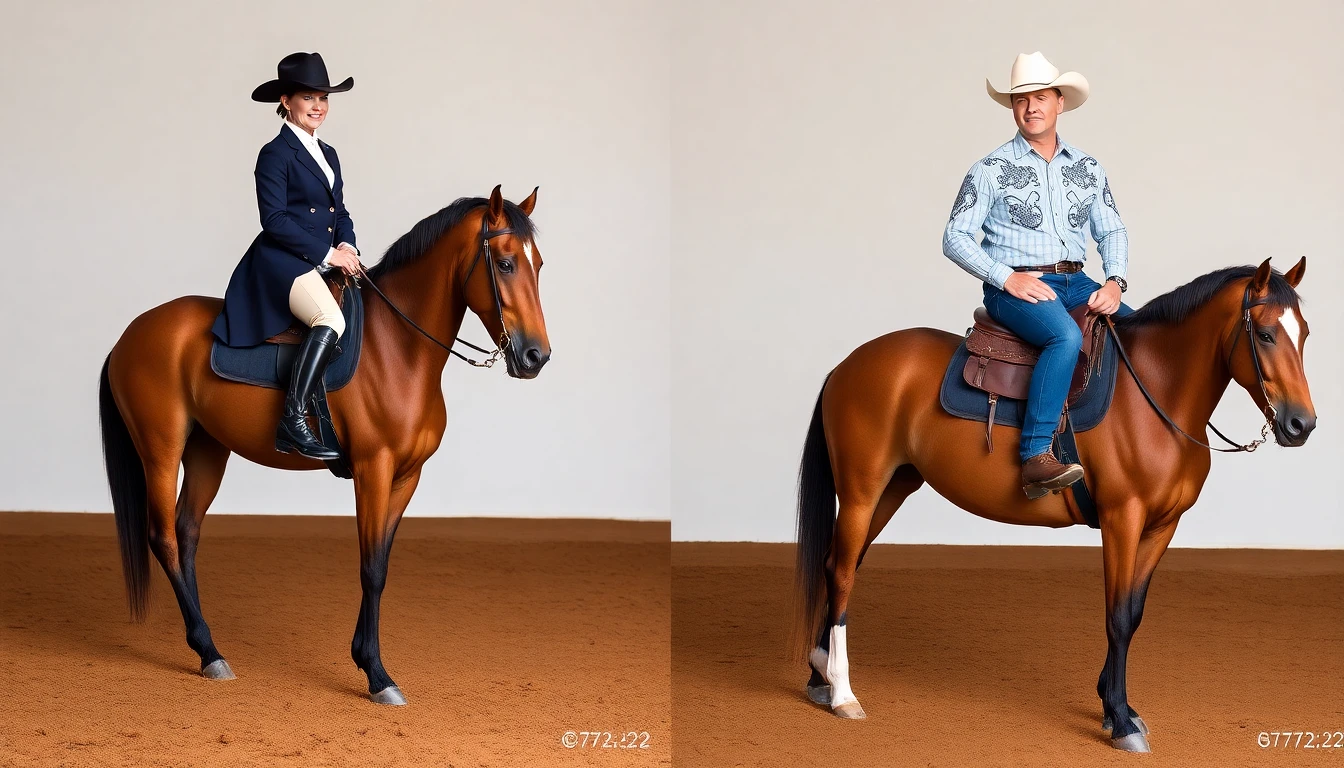
English Seat: Balance, Lightness, and Agility
English riders sit tall and centered. Shoulders stack over hips. Weight balances between both seat bones. The legs drape down long. Heels press down, toes forward. Every part of your body feels “plugged in”—alert, athletic, and ready to adjust.
Upright, Centered Posture: Your upper body sits straight. This keeps balance and contact for precise control.
Lighter, Closer Seat: You sit with closer contact to the horse’s back. This lets you move with every stride.
Dynamic Seat Positions: English riding isn’t about staying still. You’ll use different positions:
-Full seat: Deep in the saddle—steady for flatwork or dressage.
-Half seat: Rising a bit for transitions, like asking your horse to move forward or change pace.
-Two-point: Standing up out of the saddle for jumps or quick movement, using your thighs and knees for balance.
Western Seat: Deep Stability and Relaxed Endurance
Western riding focuses on comfort and endurance. The saddle is big and padded. It’s built for days on ranches or trails. Western riders sit deep. They settle back and relax. Legs stretch more forward than down.
- Relaxed, Reclined Posture: Your hips sink into the saddle. Back tilts just a touch. The position is calm and easy. Perfect for long hours.
- Deeper, Secure Seat: You become one with the saddle. This helps you handle unpredictable movements and cattle bursts without losing balance.
4. Gaits and Riding Technique: The Real-World Feel
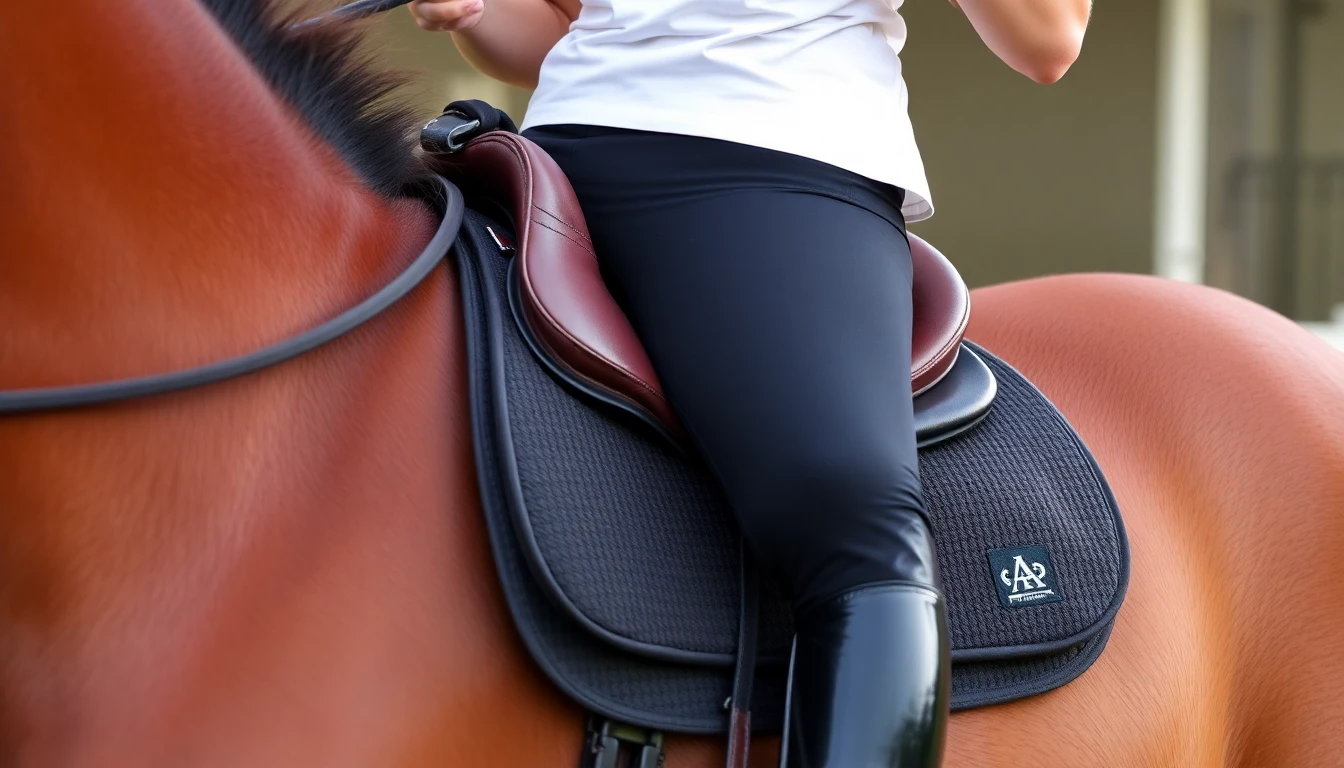
English vs. Western: The Core Gaits
Both equestrian schools start with the basics:
– Walk: The classic four-beat step. Steady and comforting.
– Trot (English) / Jog (Western): Here’s where things split. English riders have a brisk, bouncy trot. Western riders melt into an easy jog built for the long haul.
– Canter (English) / Lope (Western): Both are three-beat gaits. The English canter dances with energy. The Western lope invites you to settle in.
– Gallop: The wild, fastest gait. You’ll see it at a jump-off or a rodeo sprint, but not much else.
Riding Technique: How it Feels
The English Experience: Active Connection
English riding feels like a nonstop, rhythmic chat. The saddle is light. The horse move with high energy. This keeps you active. At the trot, you don’t just sit. You post . You rise and fall with the horse to soak up the bounce. It feels athletic. It feels precise. You hold steady contact with the reins. You sense every shift in balance. Be ready to ask for a jump or sprint instantly.
The Western Experience: Rhythm and Flow
Western riding lets you melt into the movement. The gaits are trained to be slower and smoother. So, you sit deep. Your lower back swings with the horse. The “jog” (Western trot) needs no posting. It is a gentle shuffle. You ride it from your hips. Keep the reins loose. You stop managing the horse’s head. It becomes a partnership based on trust. You guide the ride with your weight, not your hands.
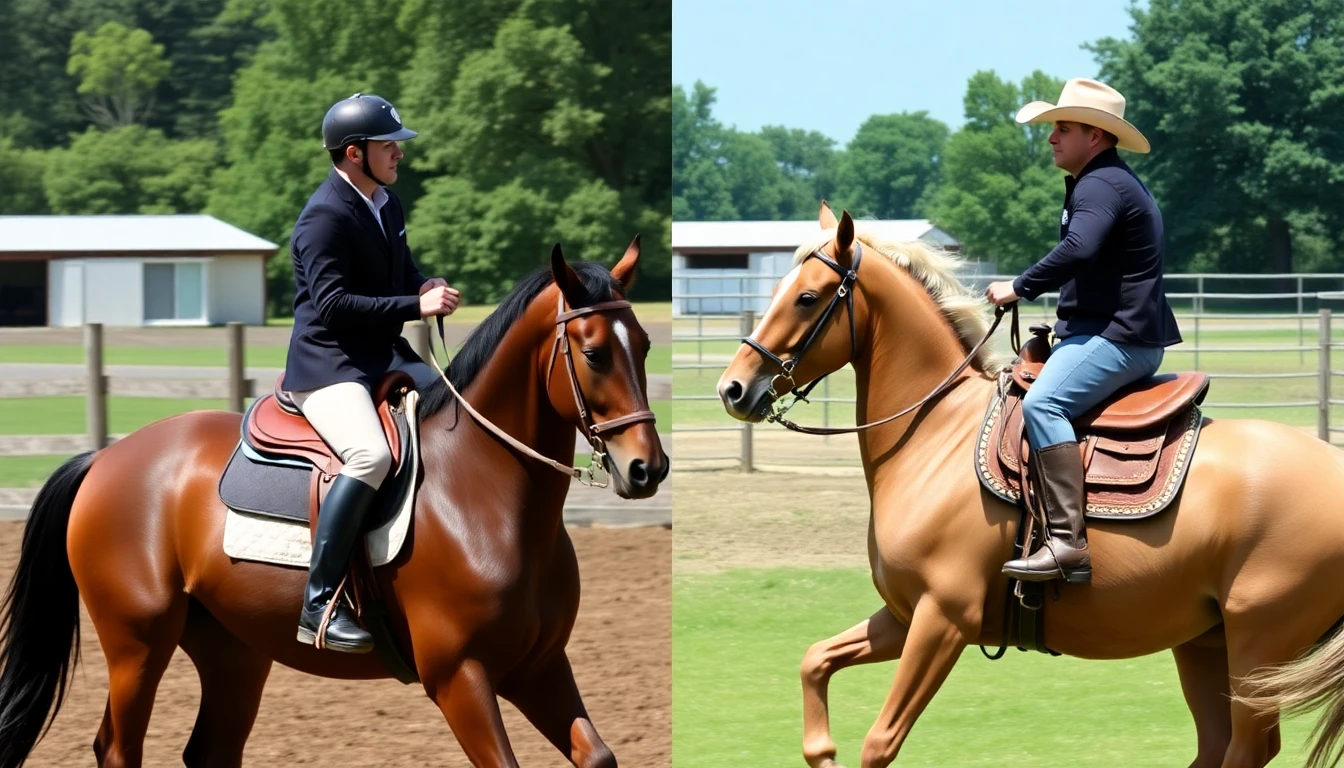
5. Disciplines
English Disciplines: Precision and Performance
English riding is rooted in tradition, detail, and elegant skill. Each discipline shows the bond between horse and rider. Some measure it in perfect circles. Others test it over soaring jumps.
- Dressage looks almost like dancing. It’s the art of fluid, subtle communication. Rider and horse move as one. Every step is calculated. Every turn is silent and intentional. Judges watch for posture and rhythm. They also check how cues are delivered.
- Show Jumping kicks adrenaline into high gear. Horse and rider map out their course, bounding over colorful obstacles. There’s always the hum of the audience. Faults get counted if a rail comes down.
- Hunter Jumper asks: how pleasant can this look? Grace matters more than speed. The team floats over at least eight obstacles. They seek smooth landings every time.
- Equitation is all about the rider. How well do they sit, hold the reins, transition, steer, and cue? Judges look for control that seems easy. They want perfect posture. The best aids are nearly invisible.
- Eventing mixes things up. You get dressage, cross-country, and show jumping combined. Think of it as the triathlon of riding. It demands stamina and courage across multiple days.
- Competitive Mounted Orienteering and Endurance Racing put grit to the test. You can tackle both English or Western style. They push horse and rider through long hours, big distances, and rough terrain.
Western Disciplines: Speed, Skill, and True Grit
Western riding channels its heritage—cowboys, open ranges, and ranch work. These roots shape fast-paced, practical, and spectacular events.
- Barrel Racing wins the crowd, no doubt. Horses and riders charge into cloverleaf patterns. They turn with sharp focus.
- Reining is Western dressage with swagger. Riders cue rollbacks, spins, and sliding stops.
- Roping is pure ranch work, fast-forwarded. It’s one rope, one shot to catch a bolting calf.
- Western Pleasure offers something softer. You see smooth, steady gaits. The horse looks relaxed.
- Trail Riding embraces the journey. It’s part sport, but more about connecting with the outdoors.
- Rodeo Events wrap it all together. From breakaway roping to bull-dodging, you get athleticism, history, and quick thinking. Wild cattle and wide pastures shaped these skills.
How to Choose the Riding Style That Best Suits You
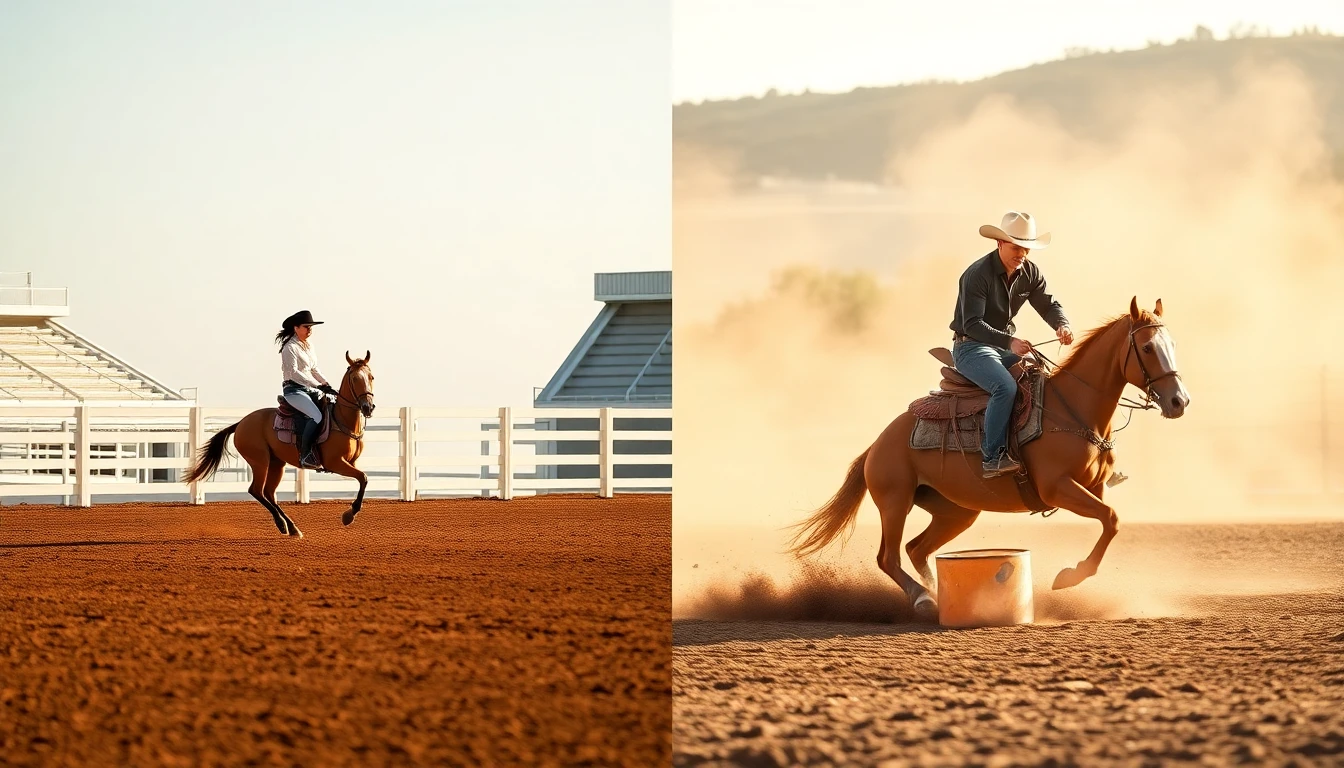
Choosing between Western and English riding isn’t just about picking a saddle. It’s about your comfort, your goals, and what excites you each time you climb into the seat. Here’s how to find your fit—with practical insights, real comparisons, and a look at what each style brings into your life.
Why Choose Western Riding?
Go for Western riding if you want all-day ease. Western saddles are made for long hours in the sun. They have wide, padded seats. They have high horns for steady hands. They have sturdy, roomy stirrups.
Western riding fits if you love ranch skills or fast sports. Barrel racing, reining, cutting cattle, and rodeo competitions? These exist in the Western world. These sports have their own addictive energy. The tack and techniques in Western are designed just for these challenges.
Should You Choose English Riding?
Pick English riding if you’re drawn to formal skill and technical precision. Want to try show jumping, dressage routines, or elegant hunter classes? These are the heartbeat of English riding.
Do you crave close contact and fine-tuned responses from your horse? English saddles are light and minimalist. They let you feel every breath and stride. Riding here means balancing upright. You center your weight. You combine gentle hand, seat, and leg cues. You’ll learn refined skills—like moving between half seat, two-point, or collected canters. It feels like ballet, just on horseback.
Dream about competing in shows where judges look for exact technique and polished form? English is your ticket in. There’s a real pull in mastering movements that look effortless but take practice and patience.
Can You Switch Between Styles?
Yes. English riding is often seen as harder to start. It asks you to juggle more skills and sharper balance. But it makes switching to Western feel easier if you ever want to try. Studies show that riders trained in English pick up other styles, including Western, faster than the other way around.
On the flip side, if you’re a Western rider making the leap to English, you might find the demand for exact leg aids and seat cues is a steep climb. But it’s worthwhile. It can be scary, yes—but every riding journey is different. There’s real value in pushing yourself.
If you’re curious, try both. Many riders start with one style. Then they cross-train or switch as their interests or horses change. Picture this: a dressage-trained rider stepping into a reining class and picking up cues fast. Or a Western trail lover giving jumping a try. There’s room for all of it. The best way to know what you love is to experience each side.
Summary
The choice between Western and English riding ultimately depends on the rider’s goals, training regimen, and personal comfort. Each riding style has its unique traditions, movements, and equipment—including different requirements for rider attire. Understanding these differences is crucial not only for the rider but also for anyone designing clothing that supports their performance. For any custom equestrian apparel needs, contact Equifactory —understanding the movement, fit, and functionality of each riding style helps ensure riders receive clothing that feels natural and comfortable in the saddle and is durable enough to meet the demands of actual riding.
FAQ
Which style is easier for a complete beginner?
Let’s be honest—Western riding usually feels a bit friendlier when you’re just starting out. That larger saddle acts like a secure bucket seat, and having the horn to grab onto when you lose your balance is a huge comfort factor. English riding forces you to develop core strength and balance much faster because there’s less saddle to hold you in. However, many trainers argue that if you learn the balance of English riding first, sitting in a Western saddle feels like a vacation, whereas switching from Western to English can feel like learning to ride all over again.
Is one style safer than the other?
Not necessarily. Safety comes down to the rider’s awareness, the horse’s training, and wearing proper gear (like a helmet!). While the Western saddle offers a deeper, more secure seat that might help you stay on during a spook, the horn can actually be a hazard if you get thrown forward. English saddles release the rider more easily in a fall. Regardless of style, the safest ride is always one where you’re paying attention and wearing a certified helmet—yes, even cowboys are starting to wear them more often now.
Can I switch styles later on?
Absolutely. Think of it like learning a dialect rather than a whole new language. The core language is “Horse”—how they move, think, and react doesn’t change. Only the “vocabulary” (your cues and tack) changes. Many riders eventually do both. You might trail ride in a Western saddle on weekends for comfort but take English dressage lessons during the week to sharpen your communication. Don’t feel like you have to sign a lifetime contract with just one discipline.
Do I need to buy all the gear before my first lesson?
Definitely not. Most stables will have school saddles and bridles ready for you. For your first few lessons, whether Western or English, the most important thing is wearing long pants (jeans are usually fine for Western; leggings or pants with no inseam are better for English to avoid chafing) and boots with a small heel (about 1 inch) so your foot doesn’t slip through the stirrup. Don’t splurge on that expensive show coat or chaps until you know you’re sticking with it.
Why do Western riders only use one hand?
It’s purely practical history. The Western style evolved from working cowboys who needed one hand free to rope cattle, open gates, or handle a lasso while riding. That’s why Western horses are trained to “neck rein” (turn based on the pressure of the rein against their neck). English riding keeps two hands on the reins because the goal is a direct, constant, and precise conversation with the horse’s mouth, necessary for the complex maneuvers in dressage or jumping.

0 Comments