

Equestrian team clothing are more than just uniform clothing; they enhance team cohesion. But creating the perfect image is more than just choosing a color scheme and adding a logo. You need to pay attention to design, fabric, sizing, sample making, and production planning to ensure the final product is flawless.
This guide, from a professional custom equestrian apparel manufacturer, leads you through the entire process from design to delivery. It helps equestrian teams, riding schools, and clubs understand how to create high-quality custom clothing that looks stylish, performs exceptionally well, and truly reflects their brand image.
Designing Your Team’s Identity: Customization Essentials
Key Phases in the Custom Apparel Journey
1. Initial Brand and Product Line Development
– Define your unique lane. Look at what competitors offer. Check their fit, price, and gaps they miss. Picture a complete line: shirts, jackets, breeches that work together like a pro show ring outfit.
– Plan for 3–4 weeks to brainstorm, research, and build your collection’s base.
2. Concept Development
– Create technical and hand-drawn design sketches. Turn your big ideas into clear plans. Color schemes, trims, sizes from juniors to adults—each part fits your riders’ needs.
– Research fabrics next. Which material gives you the right function, feel, and finish?
– Takes 2–3 weeks. Mood boards and fabric samples start to shape your vision.
3. Technical Design and Pattern Development
– Turn vision into blueprint. Tech packs spell out every measurement, seam, and stitch. Quality standards keep every garment strong from day one to years later.
– Patterns and spec sheets take 3–4 weeks. It’s slow, careful work. But it saves you months of fixes later.
4. Material Selection
– Breeches need reliable nylon-spandex blends . Shirts work best with polyester’s moisture-wicking comfort . Teams looking ahead choose eco-friendly fabrics to match their values.
– Tip: Color and texture match across big orders. That’s not extra—it’s essential.
5. Customization Techniques
– Digital sublimation, vinyl, embroidered crests—your team’s identity shows in every detail. Multi-spot printing puts names on cuffs or school logos on collars. Cost runs $10–$20 per custom feature.
– Most equestrian apparel factories have no minimums. bulk orders get you better per-piece prices.
Selecting Fabrics: Balancing Technical Performance with Tradition
Picking materials for custom equestrian team apparel goes beyond comfort. You need a look and feel that performs as hard as you ride. Competition is tough, so every fabric choice must meet technical needs and match your team’s style.
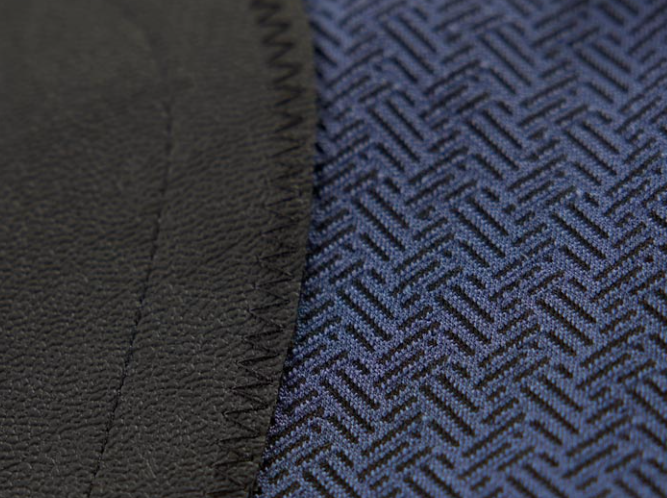
Essential Fabrics in Modern Equestrian Apparel
Polyester and Nylon Blends
These blends form the base of technical jackets, riding breeches, and jockey silks. Riders trust them for durability, moisture control, and light weight. Take traditional jockey silks—made from high-grade polyester. Their strength and sweat-wicking ability create comfort and reliability for about $154.50 per set.
Spandex or Elastane Enhancements
Mixed into jump jackets and show shirts, spandex gives you that key 4-way stretch. Riders can move, jump, and ride freely. The fabric moves with them, never against.
Cotton Blends for Everyday Ease
Casual horse riding shirts use cotton’s softness. But for competition, synthetics work better. Blends add a touch of comfort without losing wicking power or stretch.
Merino Wool Layers
Rare, but useful—merino shows up in base layers for cold climates. It gives natural warmth and breathability in harsh weather.
Performance-Driven Fabric Features
Moisture-Wicking
Key for riders who need full focus. Fast sweat removal keeps you comfortable from start to finish.
UV Protection (UPF 50+)
A must for outdoor training and summer events. Your team stays protected, not just good-looking.
Quick-Dry Mesh Panels
Fast drying and airflow make winning base layers and training tops. Strategic mesh keeps you cool.
Abrasion Resistance and Reinforced Zones
Breeches last longer with ripstop seat panels and strong knees. Eventers need fabric that handles both saddle wear and rough ground.
Water Repellent and Odor Resistance
Outerwear blocks rain. Inner layers for long show days stay fresh with antibacterial treatments.
Silicone Grip Technologies
Over 90% of modern competition breeches use silicone or suede panels. This gives you stability in the saddle, every ride.
The Tech Pack: Your Blueprint for Production Success
Think of the tech pack as the soul of custom riding equestrian clothes. Your vision becomes real-world detail that a factory can follow. It’s less mood board, more architect’s blueprint. Every seam counts. Every stitch matters.
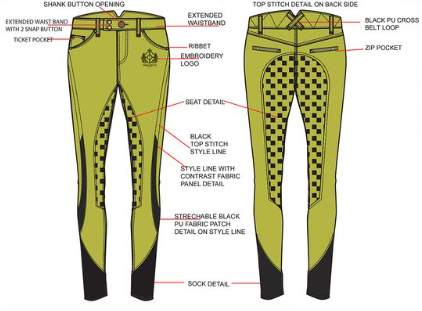
What Makes a Great Equestrian Tech Pack?
Detailed Technical Drawings:
You need more than sketches. Digital or hand-drawn flats show front, back, and fine details. A factory halfway across the world should be able to build your vision stitch by stitch.
Measurement Charts:
Precision is key. Chest, waist, inseam, sleeve—measured down to the centimeter for every size your team needs. High-performance breech tables document 10–15 crucial dimensions. This creates a fit that honors time spent in the saddle.
Construction Methods:
Leave nothing to chance. Specify flatlock seams for leggings. Riders won’t feel friction hours into a show. State the need for reinforced crotch panels in breeches.
Fabric Specifications:
Spell out every technical property. Fiber content, weight, stretch, breathability, and performance all matter. For example: a pro-grade competition shirt needs a polyester-spandex blend, 200g/m², with four-way stretch and garment-dyed to 95%+ color fidelity.
Trim and Accessory Details:
Small things set teams apart. Silicone seats, Pantone-matched zippers, logo embroidery in exact thread color and placement. “Logo must be centered on left chest, 8x8cm, stitched in Pantone 280C navy thread.”
Color Palettes:
Define each hue with Pantone codes. Your navy or cardinal stays consistent season after season, batch after batch.
Label and Branding Details:
Inside branding has rules too. Where should the woven tag lie? How should care instructions appear? No guesswork. Just clear design.
Quality Standards and Tolerances:
Success is measured in millimeters. ±0.5cm on inseams, or tights that promise less than 5% shrinkage after countless washes. Every tech pack draws lines your product cannot cross.
Grading Rules:
Fit should scale smoothly from petite jumper to tall eventer. Specify: “Breech length increases 2.5cm per size up from S to XL.”
Bill of Materials (BOM):
List fabric by name, thread by code, trim by supplier. Source and itemize everything. Every kit stays the same from London to Lexington.
Real-World Timelines and Stakes
-
Professional brands spend 3–4 weeks on each tech pack. This prevents errors that wreck timelines and budgets.
-
Factories reject incomplete or unclear tech packs right away. No shortcuts tolerated.
-
Equestrian tech packs run heavy: 8–15 pages is standard. Both designer and pattern master review each page.
-
Performance standards are set in stone. For riding tights: 100% stretch, <5% shrinkage, breathability >150gsm/min is a baseline metric in top-tier brands.
Practical Benchmarks
-
Accepted tech packs trigger minimum orders—often 50–100 units per custom design in the equestrian world.
-
Small mistakes mean expensive do-overs or whole batch rejection. The difference between a “good enough” brand and a prestige label almost always lives inside the precision of the tech pack.
From Sketch to Sample: Perfecting the Fit
Every equestrian team wants gear that feels right. It should belong to the sport and to the riders themselves. This starts with pattern making and sampling. Here, art meets technical skill.
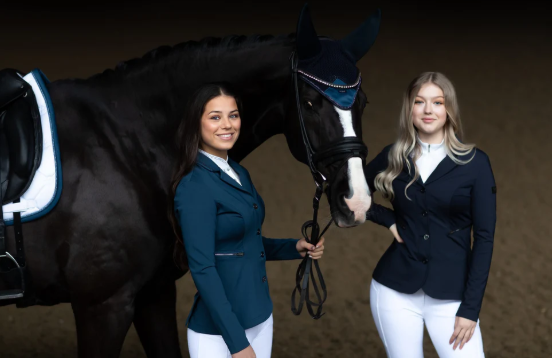
The Craft of Pattern Making
-
Each garment gets its own pattern. Breeches with knee patches need one design. A tailored show jacket needs another. Fabrics vary. Body mechanics matter. Even pockets and seams reflect what stable work and saddle time demand.
-
Patterns set the shape. They also control material use and show edge finishing details. Pocket shapes, yoke seams, reinforcements—all planned here. Those equestrian touches matter: crotch seams built for stamina, zippered or Velcro tapers where you need them, webbed rubber stripes for that classic Jodhpur look.
-
Startups and new brands can lean on ODM support. It helps turn vision into working patterns and polished samples quickly.
-
Trial samples test technical features. Softshells, waterproof membranes, fancy trims, multi-step logos—transfer prints, silicone grips, embossed designs—all show up here first.
Benchmarks, Budgets, and the Pulse of Production
Custom equestrian apparel takes time. From ideas to a wearable prototype, expect 5–7 weeks : 2–3 weeks go to concepts. 3–4 weeks refine tech packs, find the right fabric, and prep that crucial first sample. Style complexity and batch size shift the price.
Equestrian pattern making is all about details:
-Jodhpur pants reinforced where boots and stirrups hit
-Breeches with seat patches—full or knee-placed—built for solid grip and all-day comfort
-Jackets cut for easy motion in the ring, yet shaped for clean lines on the podium
Production & Quality Control: Built for the Arena
Design approved? Great. Now the real work begins: production and quality control. This is where consistency, durability, and team pride get sewn into every piece.
Sublimation, screen prints, raised silicone, woven embroidery—each method built for function and flair. Some teams choose UV-reactive logos. Others want subtle crests stitched into the lining.
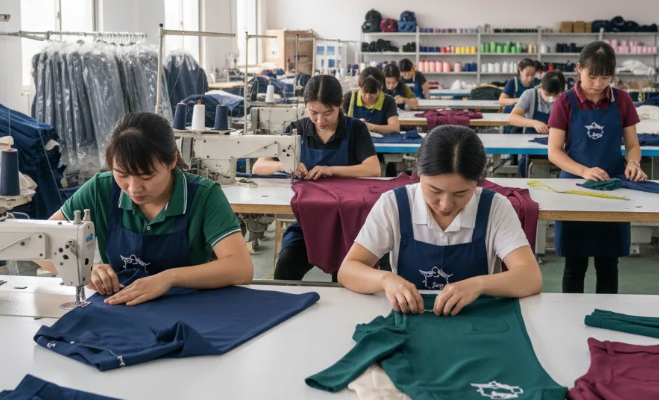
Quality Control: Discipline Meets Dedication
-
Every batch starts with a spec review. Color, trim, and fabric get checked. One mistake here and everything falls apart.
-
Pre-production samples are critical. Nothing moves forward until colors match, logos sit right, and the fabric looks and feels perfect.
-
QC teams pull random pieces on the floor. They test seams, check measurements, tug at zips. Is that heat-pressed school crest as crisp as the original? Is the navy shade the same in jacket fifty as it was in jacket one?
-
Final inspection covers every angle. No loose threads. No dull colors. No sizing surprises. Fines, pilling, or pattern slip-ups don’t ship.
-
Garments for juniors, safety tops, or body protectors meet strict global safety standards (ASTM, BETA, CE, EN, CPSIA). Certification means peace of mind, ride after ride.
“The difference between amateur and professional equestrian brands shows in their tech packs. Detailed specs save months of revisions.”
— Michael Chen, Technical Designer
Scale, Service, and Delivery
Team apparels run from 30 to 300 pieces. Shirts, jackets, breeches—each one identical in color and fit. Five-member youth team or national champion squad, it doesn’t matter.
Error tolerance hits near zero. Less than 2% defects is the industry standard. One mismatched blue or crooked crest? The batch stays in the shop, not at the showground.
Shipping matches the quality of the gear. Fast-turn air for rush jobs. Sea freight for big, steady orders. Every box hits deadlines without cutting corners.
Delivery and Distribution
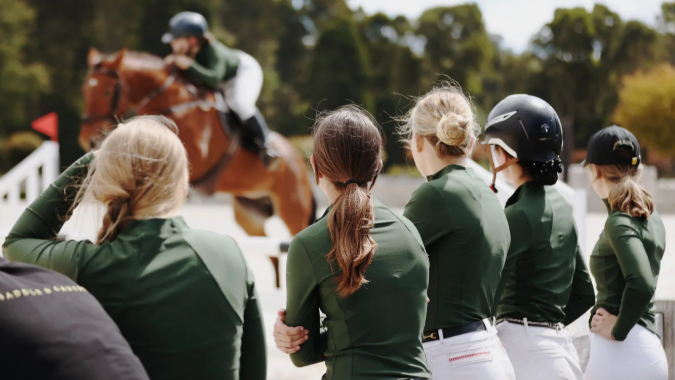
Delivery isn’t just about arrival—it’s the finale of your apparel story. Crisp jackets, bold crests, and every set lined up for the team photo. Custom equestrian team apparel needs smooth delivery and smart distribution. This makes sure every rider shows up looking—and feeling—like they belong.
Production and Shipping Timelines
Most custom team orders take 2–6 weeks from design sign-off to your stable doors. Think of it as a runway show countdown:
– Standard lead time: 3–4 weeks for production. Add 1–2 weeks for domestic shipping. International orders may take longer.
– Quick turn : Need it faster? Top vendors offer rush services—often at a premium—for those championship weekends that sneak up on you.
– Mass-market basics ship quicker. Non-custom gear often arrives within 2 weeks.
Cost Savvy and Quantity Know-How
Bulk orders can cut per-piece costs by 10–20%. Together is cheaper—better for clubs watching the budget.
Typical order size: 15–40 matching garment sets per season. The ritual repeats. Each year’s kit becomes part of team lore.
For custom embroidery or vinyl printing, most vendors stick with a 50–100 piece minimum for best prices.
Conclusion
Customized equestrian team clothing requires a significant investment of time and effort; it’s far more than simply printing a logo on a T-shirt. You want your team to project a unique image on the field, looking perfectly suited to the competition.
Technical solutions, fabric testing, delivery cycles—the entire process is complex and time-consuming. If this isn’t your core business, it can consume a considerable amount of your time. We offer a one-stop service; you simply need to provide your ideas. Whether you need matching riding shorts, outerwear, competition apparel, or a complete team apparel, Equifactory’s design and manufacturing team can transform your ideas into high-performance, professional horse riding clothing.

0 Comments